
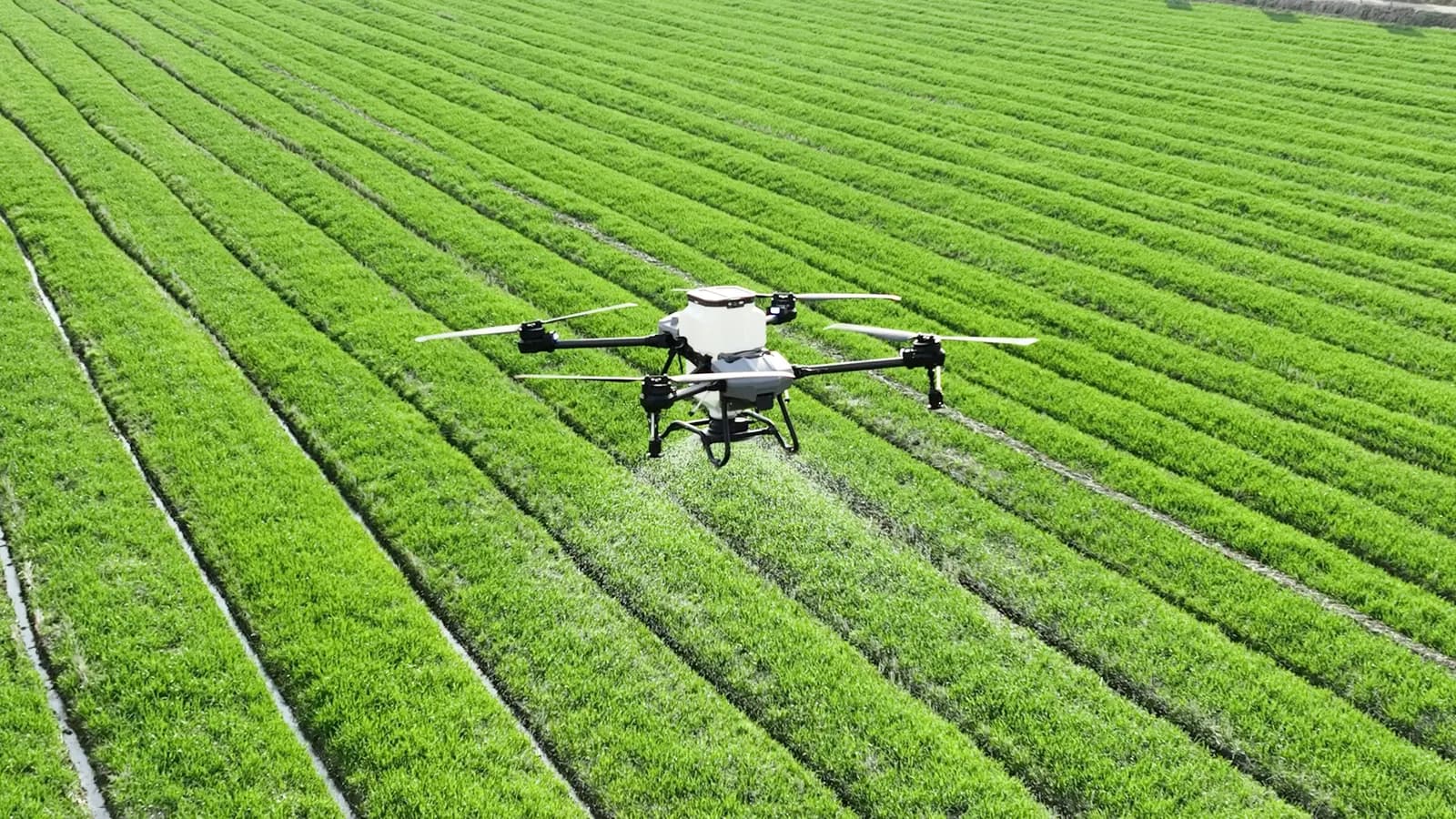
Spray drift is one of the most common concerns we hear about drone spraying, and it's a fair one — off-target movement of pesticides can damage neighbouring crops, harm waterways, and create liability. Here's an honest look at how drift works and how we manage it.
What causes spray drift?
Drift happens when droplets move off-target before they reach the surface. The main drivers are:
Wind speed and direction The biggest factor. Wind carries fine droplets sideways. Most product labels specify maximum wind speeds for application — typically 3–15 km/h depending on the product and site.
Droplet size Fine droplets (under 150 microns) are much more prone to drift than coarse droplets. Product labels often specify minimum droplet size categories. We select nozzle type and pressure to meet label requirements.
Boom height For ground rigs, boom height above the target affects drift significantly. For drones, flight altitude above the canopy serves the same function. We fly at the height recommended for the application type and product.
Temperature and humidity Hot, dry conditions cause droplets to evaporate (volatilise) before reaching the target. We avoid spraying in the heat of the day when these conditions are worst.
How does drone spraying compare?
Drones apply much lower water volumes than conventional boom sprayers — typically 10–30 L/ha versus 80–200 L/ha. This raises a reasonable concern about drift, because lower volume often means finer droplets.
In practice, well-configured drone spraying manages this in a few ways:
- Rotor wash: The downwash from the rotors pushes product down and into the canopy, which actually improves penetration compared to a conventional boom at the same droplet size.
- Nozzle selection: We use nozzles calibrated for the application rate and product, not just whatever's on hand.
- Flight speed and altitude: Slower, lower flight reduces drift risk. We don't chase productivity at the expense of accuracy.
What we do on every job
Before every job, we check the forecast and set go/no-go limits for wind speed. If conditions change mid-job and go outside acceptable bounds, we stop.
We follow product label requirements for buffer distances from waterways, sensitive areas, and neighbouring land uses. If a job has unusual constraints (adjacent organic certification, sensitive vegetation), we discuss these with you before we start.
If you're concerned about drift risk on your property, bring it up when you contact us. We'd rather talk it through upfront than have problems after the fact.
Questions?
Call us on +61 427 758 305 or use the contact form — we're happy to explain our approach for your specific situation.